As February ends, it seems only appropriate to focus on Black History Month.
I’m not a big fan of designated months for history, as we all share a unified past. Designating months for different histories can be beneficial in the classroom, but for a historian, it’s difficult to separate them. They are all interconnected.
I recently had the opportunity to sit down with DeVante Martin to discuss Tensas Rosenwald Training School for a story he was working on for KNOE. DeVante, a Tensas Parish native, is one of our own, and it was a pleasure to share some of the facts I’ve learned about the school.
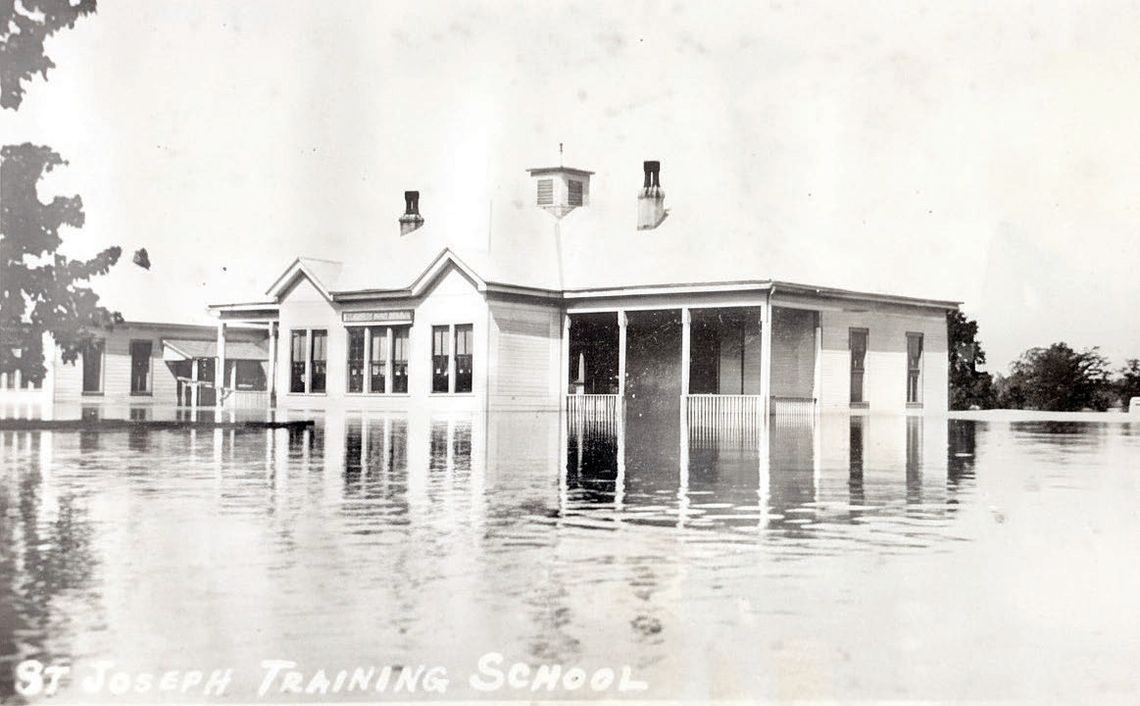
With the push by the Rosenwald Foundation in the early 20th century, Tensas Parish became fertile ground for establishing better-equipped high schools for the African American community. When Saint Joseph High School was built in 1924, an existing building was left vacant. In 1925, it was relocated to the site known as the baseball diamond in the school section just west of St. Joseph.
Much work went into giving the building new life. Unfortunately, the Great Mississippi River Flood of 1927 soon followed. The newly remodeled Tensas Rosenwald sat in four to five feet of water before the floodwaters began to recede. By the end of 1927, operations were running smoothly again.
One of the most influential members of the Rosenwald Committee was Mary Sykes. She planned to bring dormitories to the Rosenwald campus. Rural schools typically taught only through the eighth grade, and continuing one’s education meant traveling into town where high schools were located. This posed a problem for families living 35 to 40 miles away.
Students often stayed with friends or relatives who lived closer to town. The effort to build dormitories ended with the untimely death of Sykes in 1928 before the project could be completed.
By the 1930s, Tensas Rosenwald was well established. The school’s trophy case stands as evidence that it was a well-rounded institution. Mementos from the era include trophies not only in sports but also in drama, speech, band and choral singing.
The list of graduates from Tensas Rosenwald Training School is long. Through the 1950s and 1960s, graduating classes sometimes included more than 100 students walking the aisle to receive their diplomas.
A few achieved national prominence.
Andrew Brimmer became the first African American governor on the Federal Reserve Board and later a distinguished professor of economics, teaching at institutions such as Harvard University.
Emmitt Douglas served as president of the Louisiana NAACP and was a successful businessman.
Morgan Watson was among the first African American engineers to work for NASA and helped design and build the rocket engines that put man on the moon.
The list could continue. Tensas Rosenwald Training School has touched nearly every state in the nation, with graduates relocating across the country.